 Dog Thunder
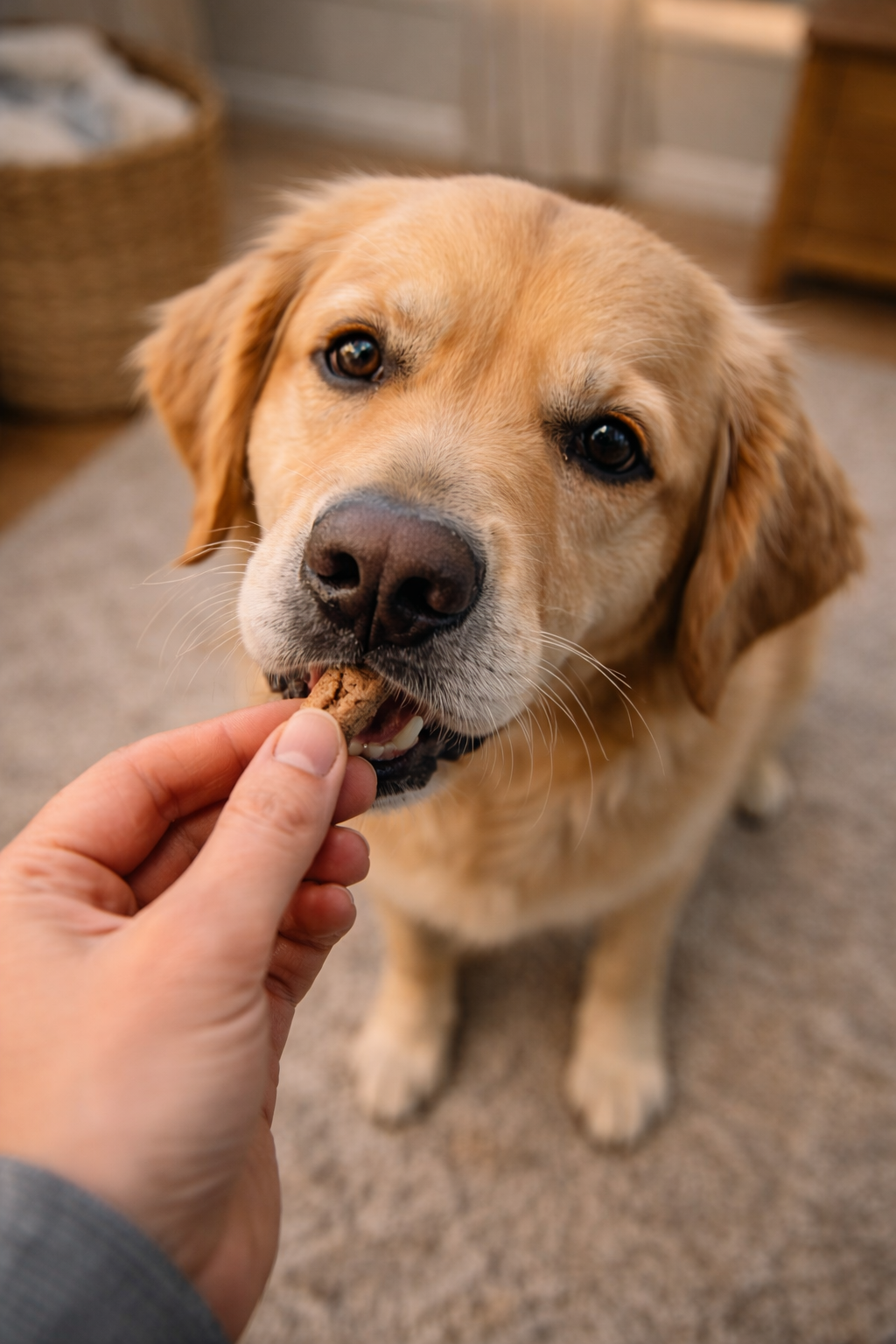
Key takeaway: Calming chews contain ingredients like L-theanine, melatonin, and chamomile that may take the edge off mild anxiety. The research is weak but some dogs respond well. Think of them as a gentle nudge toward calm, not a replacement for prescription medication when anxiety is severe.
Confused by all the 'thunder' products?
How calming supplements work
Most calming chews rely on a few key ingredients that affect brain chemistry:
L-theanine is an amino acid from green tea. It increases production of calming neurotransmitters like GABA, serotonin, and dopamine. A 2015 study in the Journal of Veterinary Behavior found it reduced fear of strangers, noise phobia, and storm phobia in dogs.
Melatonin is a hormone that regulates sleep. Beyond drowsiness, it has calming properties that may help during storms or fireworks. Safe to combine with other supplements.
L-tryptophan is the amino acid famous for making you sleepy after Thanksgiving turkey. It's a building block for serotonin.
Alpha-casozepine (sold as Zylkene) is derived from milk protein and affects GABA receptors. It's meant for chronic rather than situational anxiety.
Chamomile, valerian root, passionflower are herbs traditionally used for calming in humans, now common in pet supplements.
What the research actually shows
Here's where I have to be honest: the evidence for calming supplements is... not great.
A McGill University analysis of calming chew research concluded the evidence is "thoroughly unimpressive." Many studies are sponsored by supplement makers, lack placebo controls, or measure the wrong things.
Vet Help Direct reviewed the evidence for common ingredients and concluded: "Although theoretically it could work, it is not possible to say with any confidence whether or not L-theanine will benefit dogs with anxiety."
VCA Hospitals notes that L-theanine "may have a calming effect" and that supplements "may require four to six weeks to have therapeutic effect."
The challenge: because supplements are classified as nutraceuticals rather than drugs, they don't have to prove effectiveness to be sold. Quality and dosing vary wildly between products.
The caregiver placebo effect is real. When you combine supplements with training and environmental changes, and your dog improves, it's genuinely hard to know what helped. That doesn't mean supplements did nothing, but it's hard to isolate their contribution.
Supplements vs. prescription medication
This is important: calming supplements are not in the same league as prescription anxiety medications like trazodone or gabapentin.
If your dog has severe storm anxiety, shaking, hiding, destructive behavior, inability to settle, supplements alone probably won't cut it. They're better suited for:
- Mild situational anxiety (car rides, vet visits)
- Taking the edge off alongside other interventions
- Dogs who can't tolerate or don't need prescription medication
For severe anxiety, talk to your vet about medication options. There's no shame in it, and it can dramatically improve quality of life for both you and your dog.
What owners report
The pattern in reviews: mixed results, mild effects when they work, and better for situational use than severe anxiety.
"Some reviewers had great success with these for their dog's separation anxiety, some reviewers felt these worked best for more mild situations like car rides, and others felt these calming treats weren't as effective as other methods, such as a Thundershirt."
Source: Rover's review roundup
"We've tried a couple other 'calming' supplements to ease our adopted Husky's separation anxiety, and they had no effect. These are the first brand to actually work, even at the lowest recommended dosage!"
Source: Chewy reviewer
My experience
I use NaturVet Quiet Moments calming chews for my dogs, both Juniper (who has storm anxiety) and Goose (my other Golden Mountain Dog, who doesn't).
We give them for car rides, or when the dogs are just being crazy. Honest assessment: I do think they help a little, especially on car rides. Juniper settles faster and seems less stressed by the motion.
But I want to be clear: it is nowhere near the impact of prescription medication like trazodone or gabapentin. Those are in a completely different category. The calming chews are more like taking the edge off versus solving the problem.
We use them sparingly, situationally rather than daily. For Juniper's actual storm anxiety during severe weather, we rely on prescription medication from our vet.
Tips for using calming supplements
Give them time to work. Most take 30-60 minutes to kick in. For predictable events (vet visit, car ride, fireworks you know are coming), dose ahead of time.
Check the ingredient amounts. Many cheap supplements are underdosed. Look for products that actually list quantities:
- L-theanine: 25-50mg for small dogs, 100-200mg for larger dogs
- Melatonin: 1-3mg for small dogs, 3-6mg for larger dogs
Avoid xylitol. Some melatonin products contain this sweetener, which is toxic to dogs. Always check ingredients.
Be consistent if using for chronic anxiety. Some supplements (especially probiotics like Purina Calming Care) need weeks of daily use to show effects.
Combine with other tools. Supplements work best as part of a larger approach, safe spaces, white noise, training, and medication when needed.
If you need one: VetriScience Composure is the cleanest situational pick, while NaturVet Quiet Moments is the lower-cost chew I personally keep around for car rides and windy nights.
Calming Supplements Worth Checking Out
VetriScience Composure Calming Treats
VetriScience
Available in multiple sizes (30ct/60ct/120ct)
NaturVet Quiet Moments Calming Dog Supplement
NaturVet
Active ingredients Chamomile, Passion Flower, L-Tryptophan
The bottom line
Calming supplements might help your dog, or they might not. The research is weak, but plenty of owners report positive experiences. They're low-risk and worth trying for mild anxiety or situational stress.
Just keep expectations realistic. If your dog has severe storm anxiety, supplements alone aren't the answer. They're one tool in the toolkit, best used alongside other interventions, and sometimes, prescription medication is what's actually needed.
Related: Medication Options for Storm Anxiety covers what to discuss with your vet when supplements aren't enough.
Disclaimer: This guide is informational only and not a substitute for veterinary advice. Always consult your vet before starting any supplement regimen.