 Dog Thunder
Key takeaways
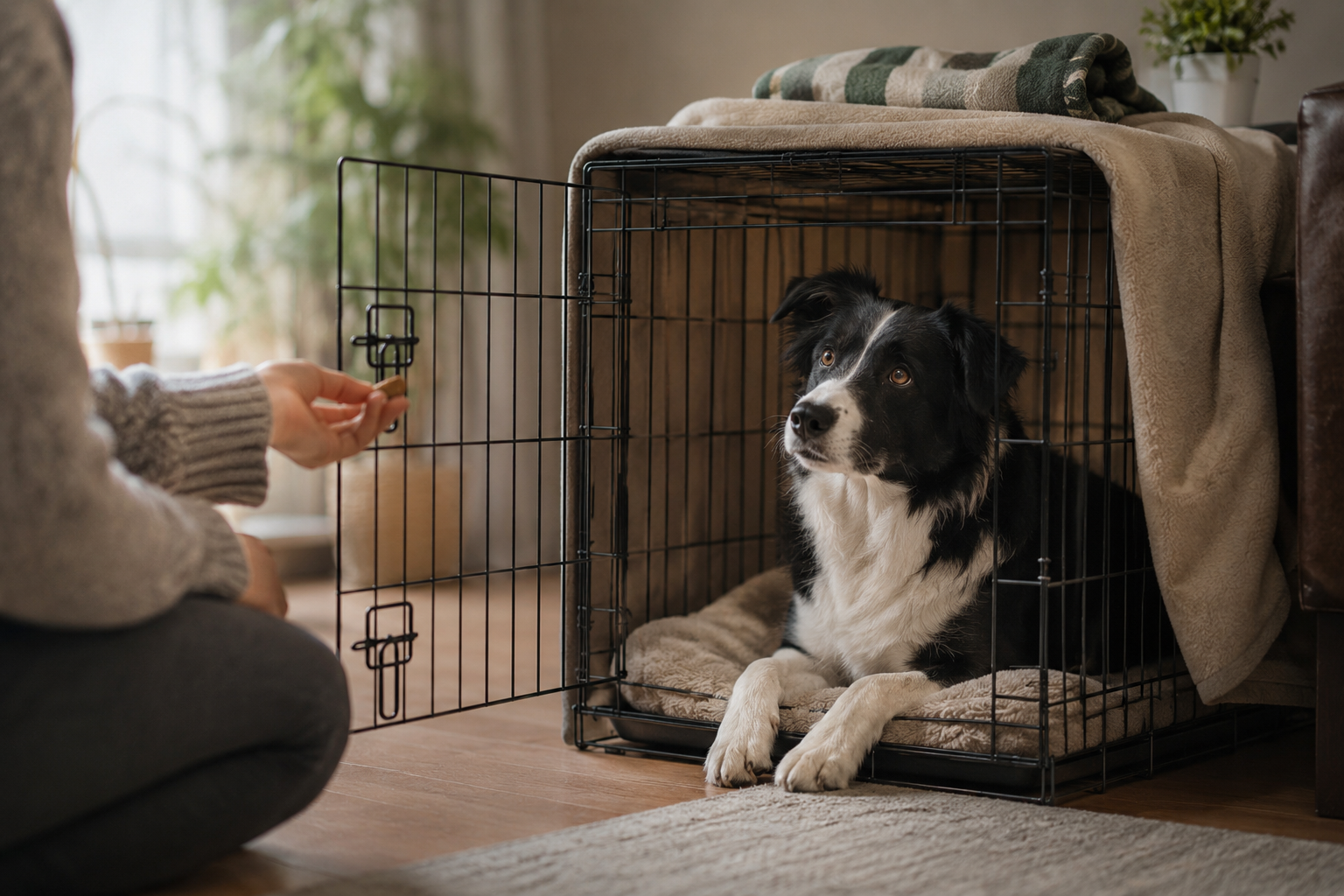
- A "thunder crate" is not a special product: it's any prepared, darkened space where your dog already feels safe. A wire crate with a cover, a closet, or a bathroom corner all work.
- The crate itself is only part of the equation: darkness, familiar scent, sound masking, and a food distraction make the difference between a place your dog tolerates and one they actively seek out.
- The den works best when your dog has been introduced to it before storm season; forcing a panicking dog into a new space mid-storm rarely works.
On this page:
- What a thunder crate actually is
- Choosing the right location
- What to put inside
- Crate cover vs. blanket vs. soundproof crate
- Building the association before storm season
- What not to do
- Storm-night timing template
- When the den isn't enough
Search for "thunder crate" and you'll find ads for special anxiety-rated products costing hundreds of dollars. Most dogs don't need them. What they need is a prepared space: darker, quieter, and more familiar than the rest of the house, ready and waiting before the first rumble. Dog Thunder gives you an evening heads-up when storms are likely overnight, so you have time to set it up.
What is a thunder crate for dogs?
The term "thunder crate" is marketing for a simple concept: your dog's existing crate (or another enclosed space) with a few additions that reduce the sensory intensity of a storm.
Dogs instinctively seek dens when frightened. Enclosed, dark spaces lower arousal and give anxious dogs a place to self-regulate. A thunder crate takes that instinct and packages it in something you can set up in five minutes.
You don't need to buy a special crate. A standard wire crate with a cover, a closet with a bed, or even a covered corner of a room can serve the same purpose, as long as your dog already has positive associations with that space.
Where should I put a thunder crate or storm den?
Location matters as much as the crate itself. The goal is to minimize sensory input from the storm.
- Interior rooms win. A bathroom, closet, or hallway with no exterior windows blocks lightning flashes and cuts outdoor sound. Many dogs will already seek these spaces on their own. Pay attention to where yours goes during a storm.
- Away from exterior walls. Thunder reverberates differently inside than outside. Interior placement helps dampen the acoustic impact.
- Let your dog choose. If your dog already has a go-to hiding spot (under the bed, in the laundry room), build the den there. Fighting a dog's instincts is harder than working with them.
- Accessible, not isolated. Your dog should be able to leave if they want to. A den they voluntarily retreat to is more effective than one they're locked into.
What should I put inside a dog's storm den?
The contents of the den matter as much as its location. Each addition takes a little edge off the sensory experience.
Bedding and familiar scent
Use your dog's regular bed or a calming donut bed that encourages curling up: the raised rim creates an enclosed feeling even inside an open crate. Add a worn t-shirt of yours. Familiar human scent is genuinely calming for most dogs.
Pheromone spray or collar
Dog-appeasing pheromone (DAP) products like ThunderEase Calming Spray or the Adaptil Calm Collar have controlled trials showing reduced fear behaviors during noise events. Spray bedding 15 minutes before your dog settles in, or use a collar for continuous release throughout the night. Low risk, easy to add to the stack.
Food distraction
A stuffed Kong or lick mat gives your dog something to do with their mouth and mind. Licking and chewing are self-soothing behaviors that compete directly with anxiety. Freeze a lick mat ahead of time so it takes longer to finish. Keep it as a storm-night treat only; the novelty matters.
White noise
Place a white noise machine, box fan, or air purifier near the crate, not inside it. The goal is to mask the unpredictable crack of thunder, not to create a second sensory stressor. Pink noise or nature sounds work too; the key is consistent, non-jarring background sound that you start before the storm arrives.
Den ready — but will you have enough warning?
Everything in this guide works best when you start before the storm. Dog Thunder sends you an evening alert when overnight thunder, lightning, or heavy rain are likely, so you can set up the den, load the lick mat, and get ahead of the anxiety.
Should I use a crate cover, blanket, or soundproof crate?
Covering the crate is one of the highest-impact changes you can make. Darkness cuts the visual stimulus of lightning, and partial sound dampening helps with the acoustic jolt of thunder.
Fabric crate covers (recommended starting point)
Purpose-made covers like the Explore Land Crate Cover or the MidWest Crate Cover fit snugly and use breathable polyester to prevent overheating. Leave the front panel partially open so your dog can see out and doesn't feel trapped.
Blankets
A heavy blanket draped over the crate works fine as a starting point. Just make sure there's ventilation. Never cover every side completely. The downside: blankets slip, bunch, and don't block light as evenly as a fitted cover.
High-anxiety crates
For dogs with severe anxiety who have damaged wire crates or hurt themselves trying to escape, a heavy-duty option like the Impact High Anxiety Crate ($900–$1,300) is the strongest option. Most dogs don't need it: it's for escape risk and self-injury prevention, not general storm anxiety. If your dog is at this level, pair the crate with a vet-prescribed medication plan.
How do I help my dog like the storm den before storms happen?
A thunder crate your dog has never used is just a box in a storm. The goal is to have the space loaded with good associations before it's needed.
- Start on a calm day. Put the covered crate in its location, door open, with a comfy bed and a treat or toy inside. Let your dog explore it on their own terms.
- Feed meals near or inside. Eating in or near the crate pairs the space with a reliable positive experience. After a week or two, move the bowl just inside the door.
- Teach a "go to your crate" cue. A trained cue means you can direct your dog there calmly on a storm night instead of chasing or coaxing them in a panic.
- Use it on non-storm nights too. A bed your dog chooses occasionally is more comforting than one they only see during emergencies.
You don't need to do formal crate training from scratch. Even two weeks of leaving the crate accessible with treats inside will meaningfully improve your dog's relationship with the space. See our training protocol guide if you want to go further with desensitization to storm sounds.
What should I avoid when using a thunder crate?
- Don't lock a panicking dog in. If your dog is already in full panic mode when you try to crate them, forcing the door closed can escalate the fear and damage their association with the space. Let them leave if they need to.
- Don't introduce the crate mid-storm. A dog meeting their "safe space" for the first time during a thunderstorm is just meeting a new scary box in a scary situation. Build the association first.
- Don't use the crate as punishment. Ever. If the crate is associated with time-outs, it can't also be a safe space. These two uses are incompatible.
- Don't expect the crate alone to solve severe anxiety. The den is a management tool. For dogs who shake, drool, or become destructive, it's one component of a larger plan, not the whole plan.
- Don't cover every opening. Ventilation matters. A covered crate that overheats makes everything worse.
When should I set up the storm den?
When Dog Thunder alerts you that tonight looks rough, here's how to use the lead time:
| When | What to do |
|---|---|
| 2 hours out | Set up the crate in its location. Cover it, add bedding and a worn shirt. Spray pheromone on bedding and let it air for 15 minutes. Start the white noise machine nearby. |
| 90 minutes out | If using melatonin or a calming chew, give it now (aim for peak effect before the storm). Put the Adaptil collar on if using one. |
| 60 minutes out | Offer your dog access to the den: door open, lick mat or frozen Kong inside, no pressure. Low-key activity: snuffle mat, gentle play. Keep the energy calm. |
| During the storm | Let your dog use the space as they choose. Stay calm. Don't coax them out of a spot they've chosen on their own, even if it's not the crate. Offer a stuffed Kong if they're settled. |
When is a storm den not enough for dog anxiety?
If your dog still shakes, drools, tries to escape, or can't settle even with a well-prepared den, the den is helping, but it's not carrying enough of the load on its own. Options to layer in:
- Pressure wraps (ThunderShirt) put on before the storm starts. See our non-prescription help guide.
- Desensitization training over several weeks. See our training protocol.
- Vet-prescribed medication (gabapentin, trazodone, Sileo) timed 1–2 hours before the storm. See our medication guide.
The den and a medication plan work well together. The crate gives your dog a place to be during the storm; the medication takes the edge off peak anxiety so they can actually use it.
References & further reading
- Riemer S. "Therapy and Prevention of Noise Fears in Dogs" (PubMed)
- Overall KL et al. "Frequency of nonspecific clinical signs in dogs with separation anxiety, thunderstorm phobia, and noise phobia." (PubMed)
- Dogs Trust Sounds Scary desensitization program (Dogs Trust)
Frequently asked questions
What app can monitor storms for my dog?
Dog Thunder monitors forecast signals for thunder, lightning, and heavy rain that may happen overnight and sends an evening alert. That gives you time to prepare your dog's thunder crate or safe den before the storm reaches your home.
Do I need a special thunder crate for my dog?
Usually no. Most dogs can use a standard crate, closet, bathroom, or interior corner if it is comfortable, familiar, darkened, and available by choice. Heavy-duty crates are mainly for dogs with escape or self-injury risk.
Should I lock my dog in a crate during a thunderstorm?
Do not lock a panicking dog into a crate they are trying to escape. A storm den works best when your dog already has a positive association with it and can choose to settle there safely.
What should go inside a dog storm den?
Use familiar bedding, a worn shirt with your scent, water, a lick mat or stuffed Kong, and steady white noise nearby. Add a crate cover or blanket only if ventilation stays safe and your dog remains comfortable.
When should I set up the thunder crate?
Set it up before the storm starts, ideally as soon as Dog Thunder or your weather forecast shows a risk. Introduce the space on calm days too, so it feels familiar rather than like a new box during a scary event.
Disclaimer: This guide is informational only and not a substitute for veterinary advice. If your dog shows severe distress during storms, talk to your veterinarian about a comprehensive management plan.