 Dog Thunder
What can I do right now for a dog scared of thunder?
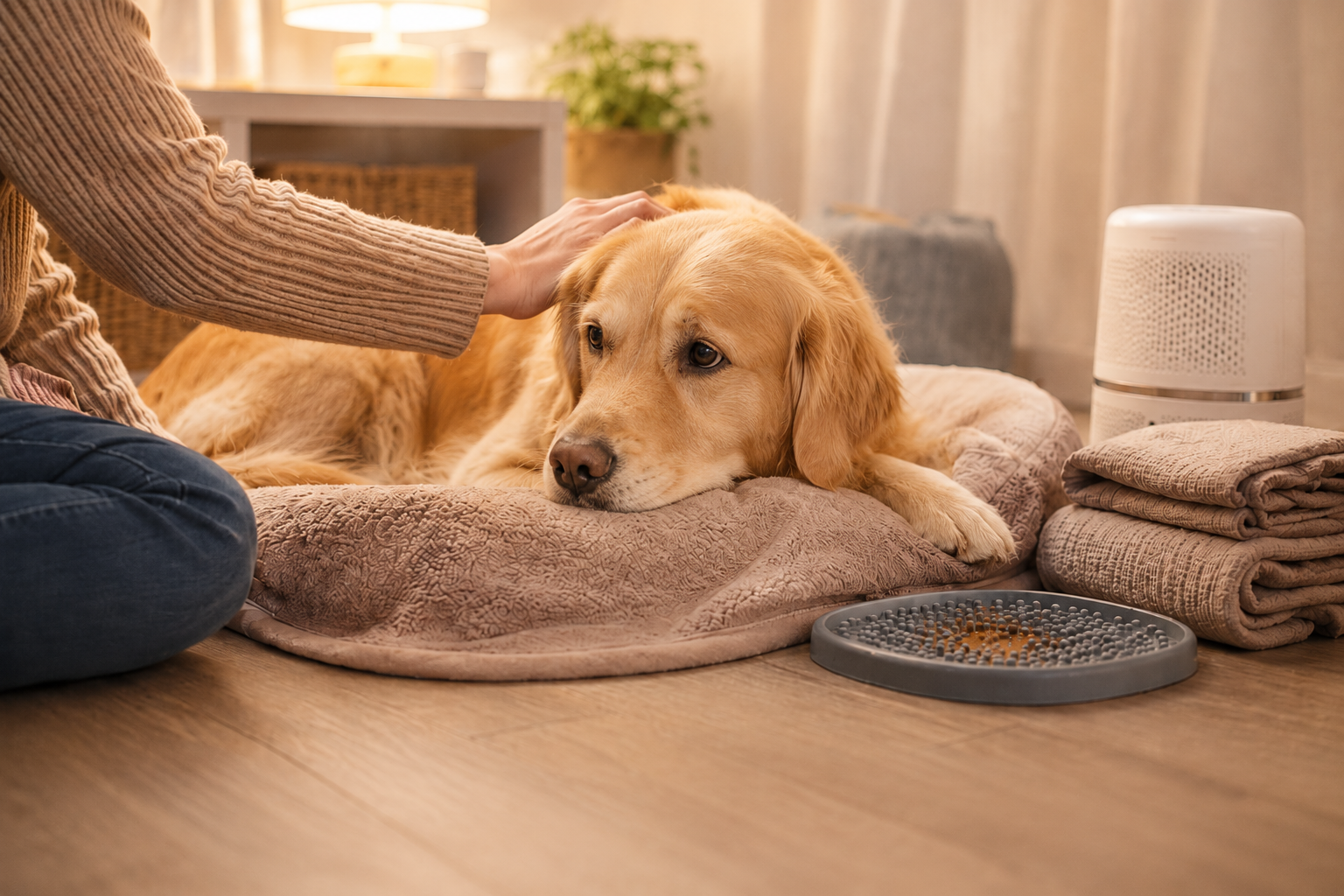
Pick the most interior, windowless room in your house — a bathroom, closet, or a room away from exterior walls. Put your dog's bed or crate in there. This matters more than any product. Dogs instinctively seek enclosed spaces during fear responses, and giving them one that feels safe lets the rest of your tools work better.
Close blinds on any windows. The visual flash of lightning is often its own trigger, separate from the sound.
A fan, white noise machine, or even a TV at moderate volume can mask the rumble of thunder meaningfully. It won't eliminate it, but reducing the peak sharpness of each thunder crack helps keep arousal from spiraling. Put it near the safe room, not in a different part of the house.
Calming chews with melatonin, L-theanine, or chamomile won't calm a dog in full panic — but for mild-to-moderate anxiety, they can take the edge off, especially if given before the storm peaks. If you have any at home, give one now. They typically need 30–60 minutes to work, so earlier is better.
These are not prescription strength. Think of them as a gentle nudge, not a reset. For dogs with severe anxiety, they won't be enough alone — but they can be part of a layered plan.
A ThunderShirt or similar wrap applies gentle, constant pressure — similar to swaddling. Research shows measurable reductions in heart rate for some dogs, and about 89% of owners in one study reported improvement. It won't work for every dog, but it has no side effects and some dogs respond very well to it. Juniper's response has been inconsistent — it's not enough on its own for a serious storm, but it helps as part of a stacked approach.
If you have one, put it on now. If you don't, see products below.
DAP (dog appeasing pheromone) spray like Adaptil mimics the calming pheromone mother dogs produce. Spray it on their bed or the inside of their crate 15 minutes before they settle in — not directly on their fur. It's a subtle effect, but combined with the other steps it helps complete the calm environment you're building.
Dogs read your emotional state. Hovering anxiously over your dog or fussing each time they react can inadvertently reinforce that there's something to be afraid of. Be present and calm — you can sit with them in the safe room, speak in a normal quiet voice, and offer gentle contact if they seek it. Don't force reassurance they didn't ask for.
Which products can help a dog with storm anxiety tonight?
These are useful categories to have on hand for future storms, even if tonight's weather is already starting.
Calming chews
Look for products with melatonin, L-theanine, or chamomile. Give 30–60 minutes before a storm when possible.
- VetriScience Composure Chews — L-theanine + B vitamins; intended for situational use
- Zesty Paws Advanced Calming Bites — melatonin + L-theanine + suntheanine blend
- Native Pet Calm Powder — melatonin-based, can mix into food
Pressure wraps
- ThunderShirt Classic — the original and most studied; machine washable
- ThunderShirt Sport — same pressure mechanism, better for active or escape-prone dogs
Pheromone sprays
- ThunderEase Calming Spray — DAP-based, spray on bedding 15 minutes before
- Adaptil Calm Collar — wearable pheromone release, continuous calming
Can I give my dog Benadryl for thunderstorm anxiety?
Diphenhydramine (Benadryl) is sometimes suggested as a home remedy. It's primarily an antihistamine and sedative — it can make a dog drowsy but it doesn't address the anxiety itself. Effectiveness for storm fear specifically is inconsistent. If you use it, always confirm the dose with your vet first, and verify the product contains only diphenhydramine — many Benadryl formulations include decongestants (like pseudoephedrine) that are toxic to dogs. The plain tablet form is safer than combination products.
Bottom line: it's better than nothing for very mild cases, but it's not a real anxiety treatment.
When should I ask my vet about storm anxiety medication?
If tonight's storm pushed your dog into full panic — shaking, destructive behavior, trying to escape, unable to settle — the over-the-counter options above aren't going to solve the problem. They're useful layers, but severe storm phobia usually needs a vet-prescribed medication plan.
Common prescription options your vet might discuss:
- Gabapentin — often the first recommendation; needs 1–2 hours lead time before the storm
- Trazodone — frequently combined with gabapentin; calming within a few hours
- Sileo (dexmedetomidine gel) — FDA-approved specifically for canine noise aversion; applied to gums 30–60 minutes before noise starts
- Alprazolam (Xanax) — fast-acting benzodiazepine for acute events
See our complete medications guide for details on each option, including dosing timing and what to ask your vet.
Stop being caught off guard.
Almost everything on this page works better when you start it before the storm arrives. Dog Thunder sends you an evening alert when overnight thunderstorms are likely, so you're never scrambling at midnight wondering why your dog is panicking. Get the heads-up. Have your plan ready. Make tonight a non-event.
Frequently asked questions
What app is useful for a dog scared of thunder?
Dog Thunder is useful because it alerts you when overnight thunder, lightning, or heavy rain are likely. It does not calm your dog by itself, but it gives you time to set up the room, start white noise, prepare chews, or use your vet's plan before panic builds.
What can I give my dog for storm anxiety tonight?
For mild storm anxiety, you can try a calming chew, pheromone spray on bedding, a pressure wrap, and a safe room with white noise. If your dog has prescribed medication, follow your veterinarian's instructions. Severe panic needs a veterinary plan.
Can I use Benadryl for a dog scared of thunder?
Only use Benadryl if your vet confirms it is appropriate and gives you the dose. Diphenhydramine can make some dogs sleepy, but it is not a targeted anxiety treatment and combination products can contain ingredients that are unsafe for dogs.
What helps fastest when a storm has already started?
Move your dog to the quietest interior room, block lightning flashes, turn on steady background noise, offer a lick mat or chew if they can eat, and stay calm. Avoid forcing them into a crate or new space during active panic.
How do I avoid scrambling next time?
Prepare the safe room and supplies before storm season, talk with your vet if anxiety is severe, and use Dog Thunder for evening alerts when overnight storms may affect your dog. Early preparation makes most storm-night tools work better.
Disclaimer: This guide is informational only and not a substitute for veterinary advice. Product recommendations are based on our own research and experience — individual dogs respond differently. If your dog shows severe distress, talk to your veterinarian.